Snow & Ice Roof Damage Insurance Claims in Aurora, CO
Denver-area spring snow has a reputation for a reason. Aurora's commercial roofs regularly take heavy, wet snowfall in March and April that carries far more weight per inch than the drier snow other months bring, and the freeze-thaw cycling that follows through the shoulder seasons creates its own separate category of roof damage that a snow or ice claim needs to document differently than a single storm event.
Wet Spring Snow Load Versus a Single Storm Event
A heavy spring snowfall on a flat or low-slope commercial roof is a real load event, and on an aging membrane or a roof already carrying ponding water issues, that load can be the thing that finally pushes a marginal condition into an active failure. Documenting a snow-load claim means establishing what the roof's condition was before the snowfall and what specifically changed after it, which is a different kind of before-and-after record than a hail or wind claim typically needs.
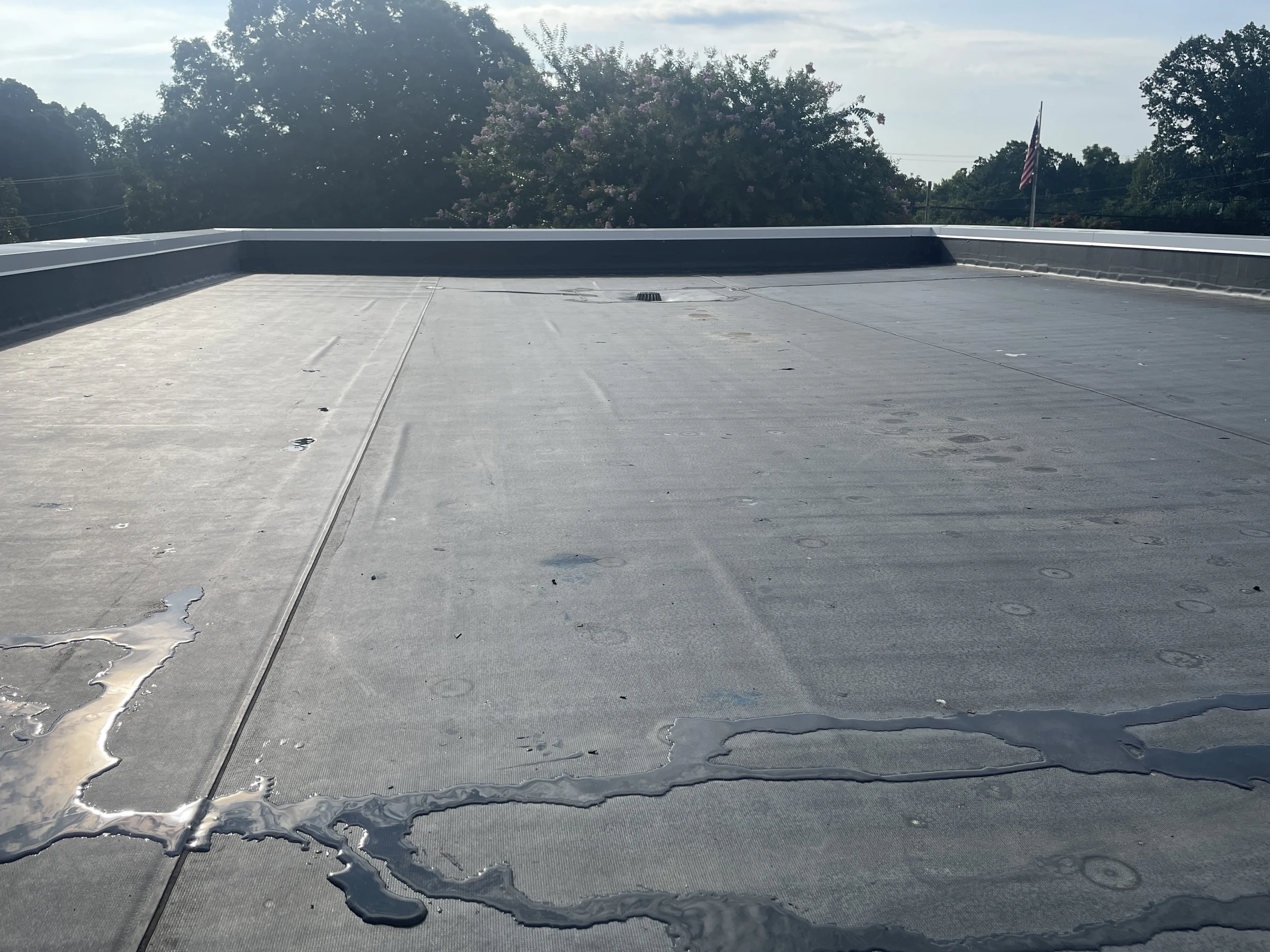
On business park and warehouse roofs across Aurora, we look for membrane stress at drains and low points where ponding concentrates the load, and for any deck deflection that shows up as new ceiling staining inside the building following a heavy snow event.
Freeze-Thaw Damage Builds Over a Season, Not a Single Storm
Freeze-thaw damage is where snow and ice claims get harder to document, because the damage rarely traces to one specific date. Water gets into a seam, membrane lap, or flashing detail, freezes and expands, and gradually widens that opening over repeated cycles through the winter and into spring. By the time a leak shows up inside the building, the damage may represent weeks or months of cycling rather than a single identifiable event.
We document freeze-thaw damage by describing the cycling pattern itself: where water is getting in, how repeated freezing has widened the opening, and what condition the surrounding membrane or flashing was in before this season's cycling began. That framing matters because a carrier evaluating a freeze-thaw claim is often trying to determine whether the damage is storm-related or gradual wear, and a clear written account of the mechanism helps make that case honestly rather than overstating it.
Ice Damming at Parapets and Roof Drains
Ice damming shows up most often at parapet walls, scuppers, and roof drains where meltwater refreezes faster than it can clear the roof. On buildings with recessed drain areas or older scupper details, common across some of the older business park stock in this part of the metro, that trapped ice can back water up under the membrane at the drain itself, which produces a leak location that's easy to misread as a membrane failure rather than a drainage problem.
We document ice damming separately from membrane damage, including where the ice is forming and why, since the repair scope for a drainage-driven leak differs from the scope for damaged membrane, even though both can produce the same interior water stain.
- Before-and-after documentation for heavy snow-load events
- Freeze-thaw cycling pattern described in written findings
- Ice dam location and cause documented separately from membrane damage
- Ponding water and drainage assessment tied to the claim
- Interior water staining photographed and matched to a roof location
- Repair scope covering membrane, flashing, and drainage components
Snow & Ice Claim Questions From Aurora Building Owners
Does insurance typically cover freeze-thaw roof damage?
It depends on your policy and how the damage is classified. We document the cycling pattern and mechanism factually so your carrier can evaluate it against your policy terms; we don't make coverage determinations ourselves.
How do you document damage that built up over an entire season?
We describe the mechanism in writing, including where water is entering, how repeated freezing has affected the opening, and the surrounding membrane condition, rather than trying to pin the damage to a single date it may not have.
Is ice damming a roof problem or a drainage problem?
Often both are involved. We document where the ice is forming and why, since a drain or scupper that's undersized or blocked can be the root cause even when the visible damage looks like a membrane leak.
Can heavy spring snow damage a roof that looked fine beforehand?
Yes, particularly on a membrane already carrying ponding water or minor prior wear. The added load from a heavy wet snowfall can push a marginal condition into a visible failure.
Will you handle the repair after the claim is resolved?
Yes. We provide the documentation supporting the claim and carry out the membrane, flashing, or drainage repair work once a scope is agreed on.