Apartment Roofs Across Aurora Take the Same Hail Front Range Retail Buildings Do
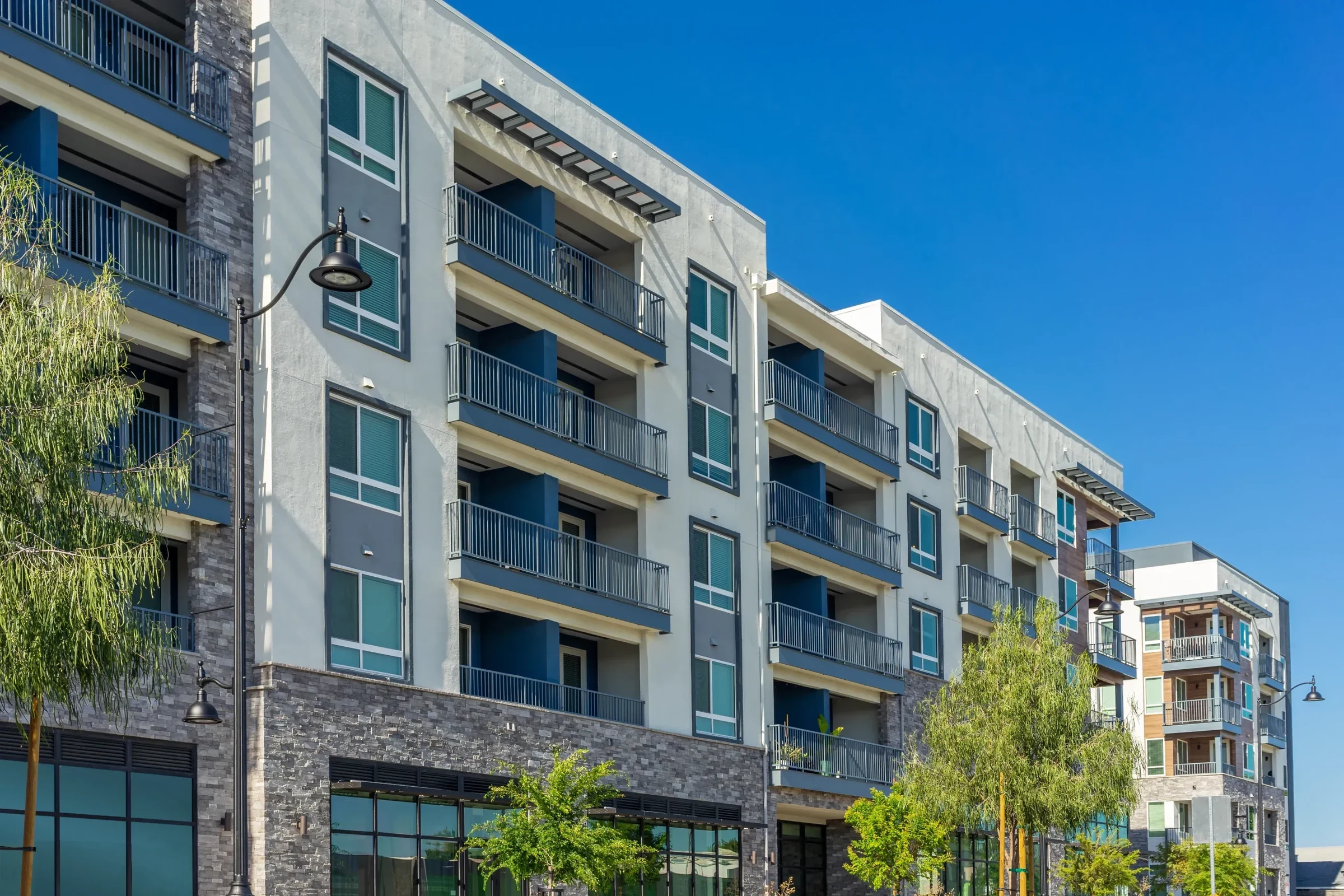
Multifamily roofing in this market covers everything from garden-style apartment complexes with pitched composition shingle buildings to mid-rise properties running flat TPO over structured parking, and almost every property in this metro has taken at least one significant hail hit in recent years.
Occupied Buildings Mean the Schedule Bends Around Residents
Reroofing an occupied apartment building is nothing like reroofing a vacant commercial box. Residents are home during the day, cars sit in the parking areas below the work zone, and property managers need advance notice they can actually give tenants, not a two-day heads up.
We build multifamily reroof schedules around building-by-building sequencing with published dates property management can post to residents, and we coordinate ground protection for parking areas and walkways before tear-off starts, not as an afterthought.
Balconies and patios sitting directly below a work zone need their own protection plan, since residents often store belongings there that a generic tarp-and-debris-net setup won't adequately cover. We walk each building's exterior with property management before work starts to flag those spots specifically.
Pitched and Flat Systems Both Show Up Across This Portfolio Type
Garden-style complexes built with pitched roofs typically run composition shingle or occasionally standing seam on clubhouse and amenity buildings, while mid-rise and podium-style properties usually run flat single-ply over the main structure. We quote each roof type on the property separately rather than averaging cost across a mixed portfolio.
TPO has become the default flat-roof choice on newer multifamily construction here, largely because it holds up well against Front Range hail exposure and gives property owners a warranty term that lines up with typical hold periods.
Insurance Claims Are a Bigger Part of This Segment Than Most
Hail alley means multifamily property owners file roof claims more often than owners in most other commercial segments. We document damage the way an adjuster expects to see it, photos tied to specific building and unit locations, not a generic damage summary, because a poorly documented claim on a 200-unit property costs the owner real money in denied or reduced payouts.
- Building-by-building roof age and material inventory across the property
- Storm damage documentation tied to specific buildings, not a blanket property summary
- Parking and walkway protection plan for occupied-site tear-off work
- Gutter and downspout condition on pitched roof buildings
- Flat roof drainage and ponding history on podium or mid-rise structures
- Resident notification timeline that gives property management something they can actually post
Property Management Turnover Makes Roof History Hard to Track
Multifamily properties change management companies more often than they change owners, and roof maintenance records frequently get lost in that transition. We rebuild a property's roof history during our first inspection rather than relying on whatever paperwork the current manager was handed.
Clubhouse and Amenity Buildings Often Get Overlooked in Budgeting
Owners tracking capital reserves for a multifamily property tend to think first about the residential buildings and forget the clubhouse, leasing office, or covered parking structure roofs on the same site, even though those amenity buildings often carry a different roof system entirely and age on a different schedule than the main residential stock.
We inventory every roof on a property, beyond just the units generating rent, since a leaking clubhouse roof during a prospective resident's tour costs a property manager more in lost leasing momentum than the repair itself. That inventory also gives ownership one document that tracks age and material across every structure on site instead of a patchwork of separate notes for each building type.
New Construction in This Corridor Is Setting a Different Baseline
New multifamily development going up around this metro increasingly specs TPO with heavier-gauge membrane and enhanced impact resistance from day one, largely because owners have watched older properties in the same hail corridor cycle through claims faster than expected. We see that shift reflected in what developers ask us to bid on new-construction multifamily work compared to five or six years ago.
Owners renovating older properties sometimes ask us to match that newer baseline during a reroof rather than simply replacing like for like, and we'll run the cost comparison honestly so the decision is based on real numbers against the property's maintenance program rather than a sales pitch.
What Property Managers Ask Before We Start
Can you reroof one building at a time while residents stay in the property?
Yes, that's the standard approach on occupied multifamily work. We sequence building by building and give property management a schedule they can communicate to residents in advance.
How do you protect parked cars and walkways during tear-off?
We stage protective covering and coned-off zones before work begins each day and clear debris before residents return from work, particularly on properties with limited alternate parking.
Do you handle the insurance claim process for storm damage?
We document damage in the format adjusters expect and support the claims process, though the claim itself is filed and negotiated between the owner and their carrier.
What's driving more multifamily reroofs here, age or storm damage?
Both, roughly evenly. A lot of properties are old enough to be near the end of original roof life right as hail seasons have gotten more frequent, so the two factors often hit the same buildings together.
Can you work on a phased schedule across a large multi-building property?
Yes, and for anything over a few buildings we recommend it, phasing spreads out resident disruption and lets us catch issues on early buildings before they repeat across the whole property.