EPDM on the Business Park Ring: Inverness, Dove Valley, and Meridian
A large share of the office and flex buildings in the business parks just outside Denver's city line -- Inverness, Dove Valley, Meridian -- still carry the EPDM roofs installed when those parks were built. Most of what we do here is repair, recover, or full replacement rather than new install. This page covers how that decision gets priced.
Where EPDM Still Dominates the Roof Stock
New construction along the DIA warehouse corridor went almost entirely to TPO once single-ply took over the market, but the business parks that grew up alongside the Denver Tech Center in the 1990s and 2000s were built on EPDM, and a lot of that membrane is still up there today. Age is the first number we look at, followed by how the roof was originally installed.
That distinction matters for budgeting. A warehouse conversation is usually about new construction pricing; an EPDM conversation in Inverness or Meridian is almost always about remaining service life, current condition, and whether a recover buys enough years to make sense against a full tear-off.
Glendale's dense retail and office enclave carries some of the same vintage EPDM stock, packed onto smaller roof footprints than a sprawling business park building. Tighter roof access and shared parapets between adjoining buildings change the logistics of a recover project there even when the membrane condition itself looks similar to a Meridian office park.
Ballasted vs Fully Adhered: What Drives the Choice
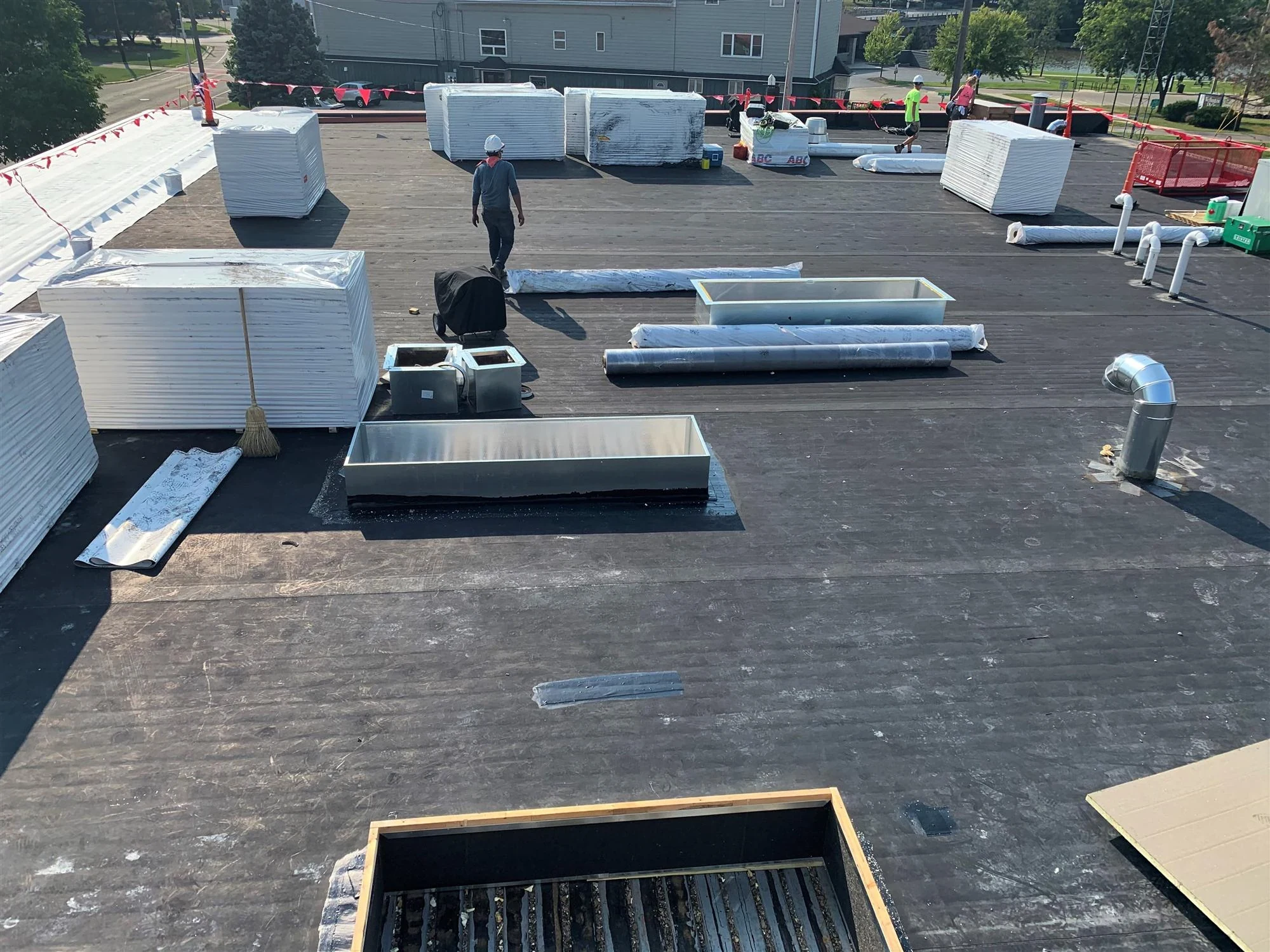
Ballasted EPDM uses loose stone to hold the membrane down, which keeps material and labor cost lower but adds real dead load to the roof structure. Fully adhered EPDM costs more to install but keeps the roof lighter and gives us a cleaner surface for future recover work.
- Structural load capacity of the existing deck
- Parapet height available to retain ballast stone
- Wind exposure of the building's location
- Rooftop equipment density and walk-path needs
- Whether a white membrane is worth the premium for cooling load
- Total project budget ceiling
On an older building where the structural engineer has any doubt about additional dead load, fully adhered is the only responsible number to write, regardless of what it costs against a ballasted system.
Wind exposure changes the calculation on some of the taller office buildings in the business park ring too. A building with more open exposure on its upper floors sees higher uplift pressure at the roof edge, which can push us toward fully adhered or mechanically attached EPDM even where a shorter, more sheltered building nearby could run ballasted without concern.
Hail and a Black Membrane: The Insurance Conversation
Hail damage on black EPDM is harder to read than on a lighter membrane. Bruising can look severe without actually breaking the membrane's waterproofing, and a puncture can be small enough that it doesn't show from a casual walk-through. Both mistakes cost an owner money -- one in unnecessary replacement, the other in a leak nobody caught in time.
We probe seams and penetrations after any storm event significant enough to generate hail-damage claims in the area, and we document what we find with photos tied to specific roof zones. That record goes to the owner or their adjuster; see our documentation support page for how that process works.
Seams Are Where an EPDM Roof Actually Fails
EPDM shrinks slightly over decades of thermal cycling, and that shrinkage pulls at seams, flashings, and penetrations long before the membrane field itself gives out. Tape and adhesive seams installed twenty or more years ago are usually the first thing we find compromised on an older roof, well ahead of any problem in the open field.
Recovering an EPDM roof with new EPDM is straightforward chemically, since the material bonds to itself the way TPO can't. Where the existing membrane has already failed at multiple seams and flashings, though, a full tear-off is usually the more honest number, since a recover just buries the same weak points under a new layer.
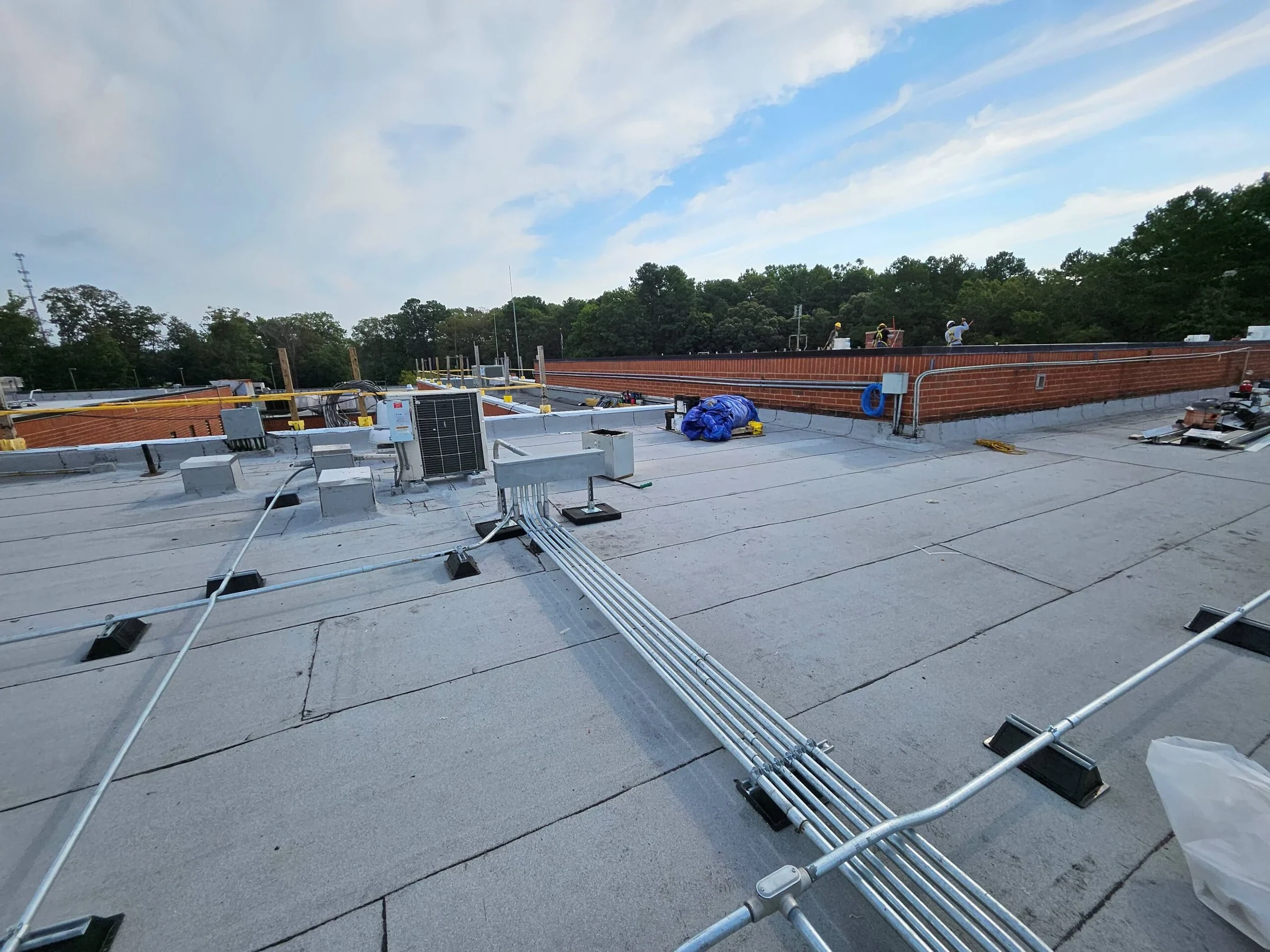
Flashing at rooftop units and parapet walls ages the same way seams do, and on a building with a couple decades of accumulated rooftop equipment changes, every added curb is another flashing detail that needs its own inspection rather than an assumption that it matches the original installation quality.
Questions We Get About EPDM in the Business Parks
Why does EPDM shrink over time?
Repeated heating and cooling cycles pull moisture and plasticizers out of the rubber compound gradually, which tightens the membrane and puts stress on the seams and edges before it affects the open field.
Can you install white EPDM instead of black on a building with rooftop units?
Yes. White EPDM costs more up front but lowers roof surface temperature, which can reduce the load on rooftop condensers and slow UV-driven aging of the membrane.
Is ballasted EPDM a good fit for a building with lightweight structural steel?
Not usually. Ballast adds meaningful dead load, and a lightweight deck may need a fully adhered or mechanically attached system instead. We confirm structural capacity before recommending ballast.
How do you tell hail bruising apart from a real puncture on black EPDM?
We probe the membrane by hand at every suspect spot rather than relying on a visual check. A bruise deflects and holds its shape; a puncture doesn't.
Do you still install new EPDM roofs, or mostly repair existing ones?
Both, but most of our work in the business park ring is repair and recover on roofs that are already twenty-plus years into their service life.