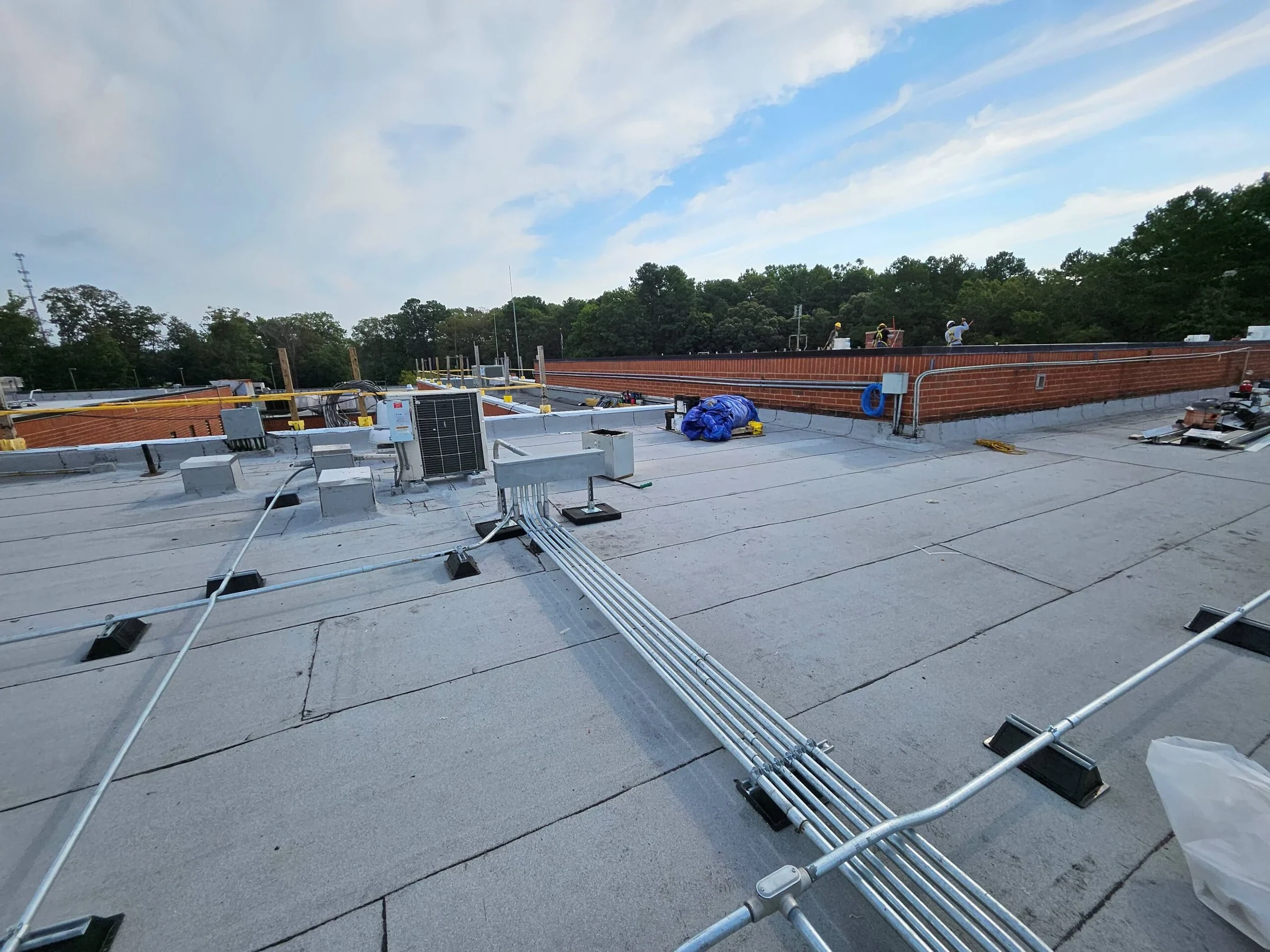
Modified Bitumen on Occupied Institutional Roofs
Older sections of the Fitzsimons medical campus, several of the senior living facilities scattered through Aurora, and a lot of the multifamily and government building stock built before single-ply took over all still carry modified bitumen roofs. It's a multi-ply system that rewards good installation and punishes shortcuts, and the application method matters as much as the material spec.
Why Modified Bitumen Still Makes Sense on These Buildings
Modified bitumen builds redundancy into the roof through multiple plies rather than relying on a single membrane sheet the way TPO or PVC does. On a building that can't afford a leak -- an occupied hospital wing, a senior living facility with residents in place -- that redundancy is worth the extra labor and material cost over a thinner single-ply alternative.
It also tolerates rooftop traffic and equipment better than some single-ply systems, which matters on institutional buildings where maintenance staff are up on the roof regularly servicing mechanical units, exhaust fans, and emergency generators.
Senior living facilities scattered through Aurora carry a similar profile to the older hospital wings near Fitzsimons -- occupied around the clock, limited tolerance for disruption, and a maintenance staff that's usually stretched thin across several buildings. Modified bitumen's tolerance for foot traffic and its multi-ply redundancy both matter more on that kind of property than on a vacant warehouse roof.
Torch-Down, Cold-Adhesive, or Self-Adhered
Torch-applied modified bitumen is still common and installs fast, but open flame near an occupied building -- especially a hospital wing with medical gas lines or oxygen equipment nearby -- isn't always an acceptable method. We evaluate the building and its occupants before recommending torch application at all.
- Occupied hospital and lab wings near active medical gas or oxygen lines
- Senior living buildings with residents present during the work
- Buildings with limited fire watch staffing available
- Roofs near flammable storage or fuel tanks
- Standard vacant or low-risk commercial buildings
Cold-adhesive and self-adhered systems cost more in material and take longer to install, but they remove the open-flame risk entirely. On facilities near Fitzsimons and on occupied senior living buildings, that trade-off is usually worth it, and we price both methods so the owner can see the difference.
Granule Loss and What Hail Does to This System
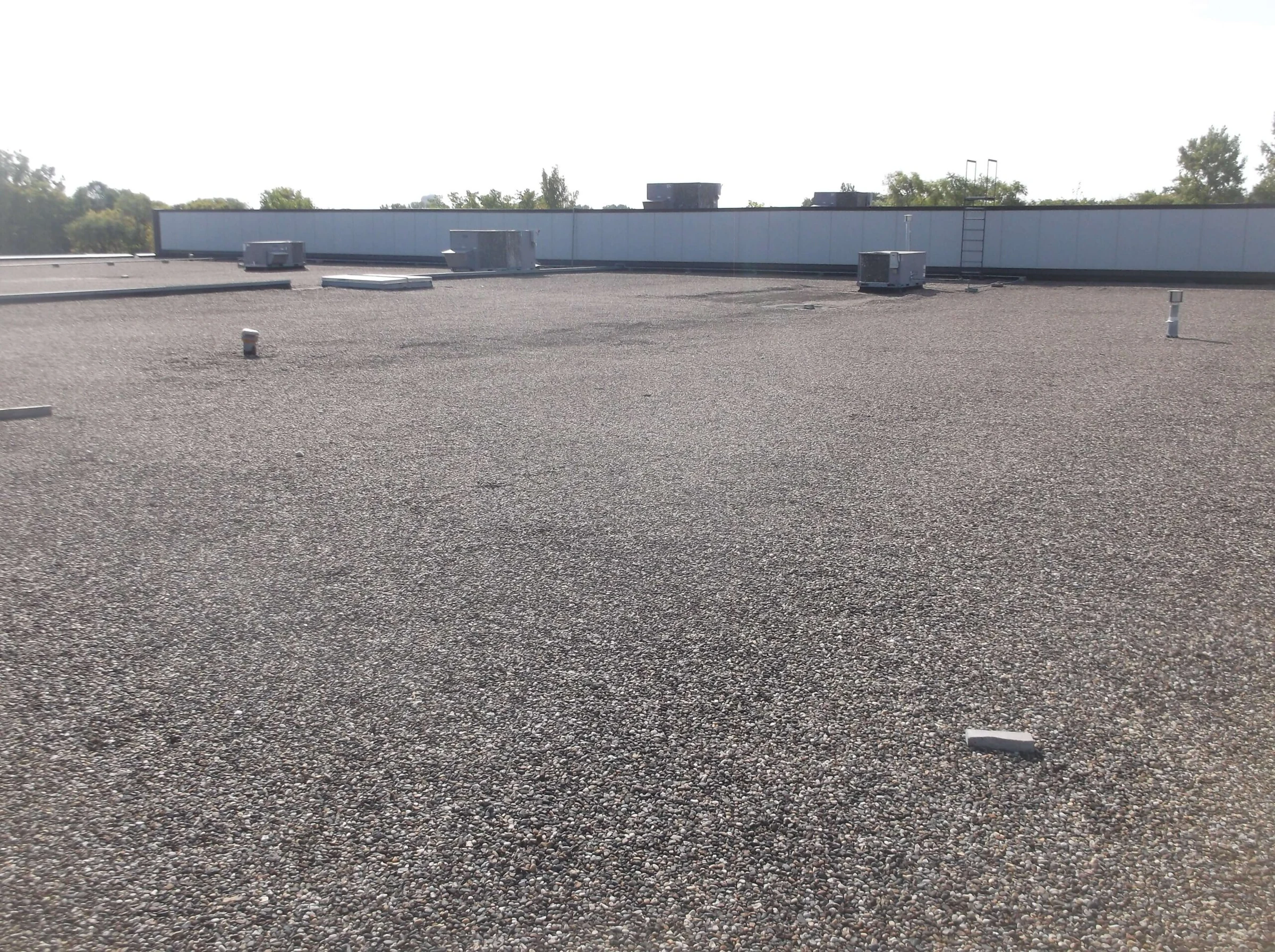
A modified bitumen cap sheet's granule surface is both its wear layer and its UV shield. Hail strips granules on impact, and enough granule loss exposes the asphalt underneath to UV degradation faster than the roof was designed for, even if there's no immediate puncture.
A post-storm inspection has to cover granule coverage in addition to checking for punctures. A roof that lost significant granule cover in a hailstorm may still be watertight today but is aging faster than it should, and that's worth flagging to the owner before it becomes a leak two summers from now.
We map granule loss by section rather than describing a roof as generally damaged. A building with heavy loss concentrated on one slope or parapet-facing area often just needs a targeted cap sheet repair there, while the rest of the field can wait for its next scheduled maintenance cycle.
Multi-Ply Redundancy and Where It Actually Pays Off
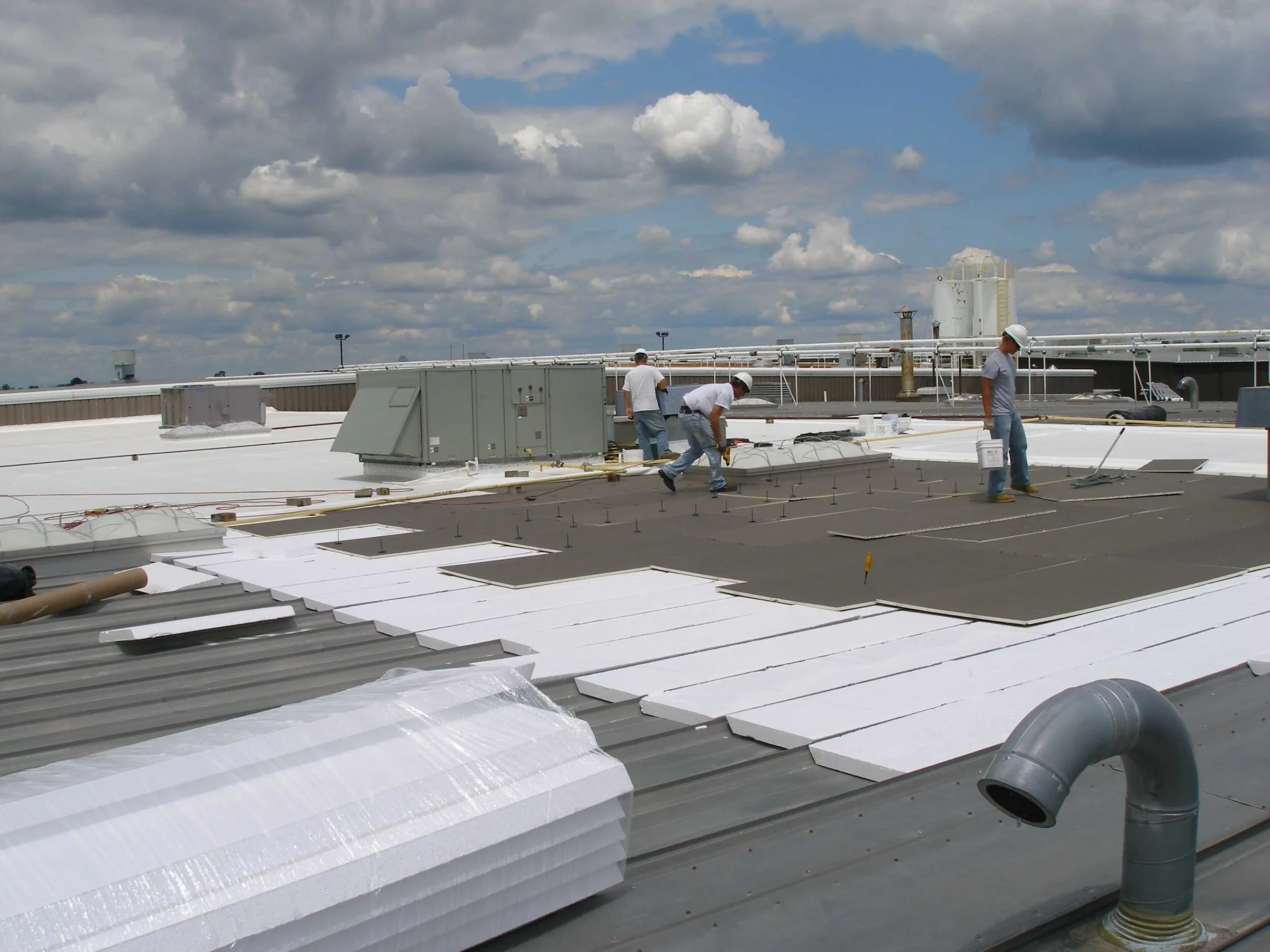
A base ply and cap ply installed correctly give a modified bitumen roof two independent waterproofing layers instead of one. If the cap ply gets damaged locally -- by hail, by foot traffic, by a dropped tool during rooftop maintenance -- the base ply is still there holding the line while we make the repair.
That redundancy is the whole argument for keeping modified bitumen on a building instead of converting to single-ply at the next re-roof. On lower-risk buildings without occupied space or sensitive equipment below, the labor cost of multi-ply construction sometimes doesn't pencil out against TPO. We run that comparison honestly rather than defaulting to one system.
Government and municipal buildings around Aurora fall somewhere in between those two cases. They're rarely as sensitive as an occupied hospital wing, but procurement rules and budget cycles often favor a system with a longer proven track record over a newer single-ply alternative, which keeps modified bitumen in the conversation on public buildings even where a private owner might switch.
Questions About Modified Bitumen on Institutional Roofs
Can you install modified bitumen without a torch on an occupied hospital wing?
Yes. Cold-adhesive and self-adhered systems avoid open flame entirely, and we recommend them by default on any building with occupants or medical gas equipment nearby.
How do you know how much granule loss is too much?
We compare exposed asphalt area against the total roof field during inspection. Isolated granule loss usually just needs monitoring; widespread exposure changes the maintenance timeline.
Is modified bitumen more expensive than TPO?
Installed cost runs higher due to the multiple plies and labor involved, but the redundancy can extend service life on buildings where a leak carries real consequences.
Do you recover modified bitumen with a new cap sheet, or replace the whole system?
Depends on the base ply's condition. If it's dry and intact, a new cap ply alone can extend the roof's life significantly at a fraction of full replacement cost.
Does modified bitumen handle Front Range temperature swings well?
Reasonably well, though repeated freeze-thaw cycling stresses seams and flashings over time the same way it does on any built-up system. Regular inspection catches that before it becomes a leak.