Commercial Roofers in Dia Corridor
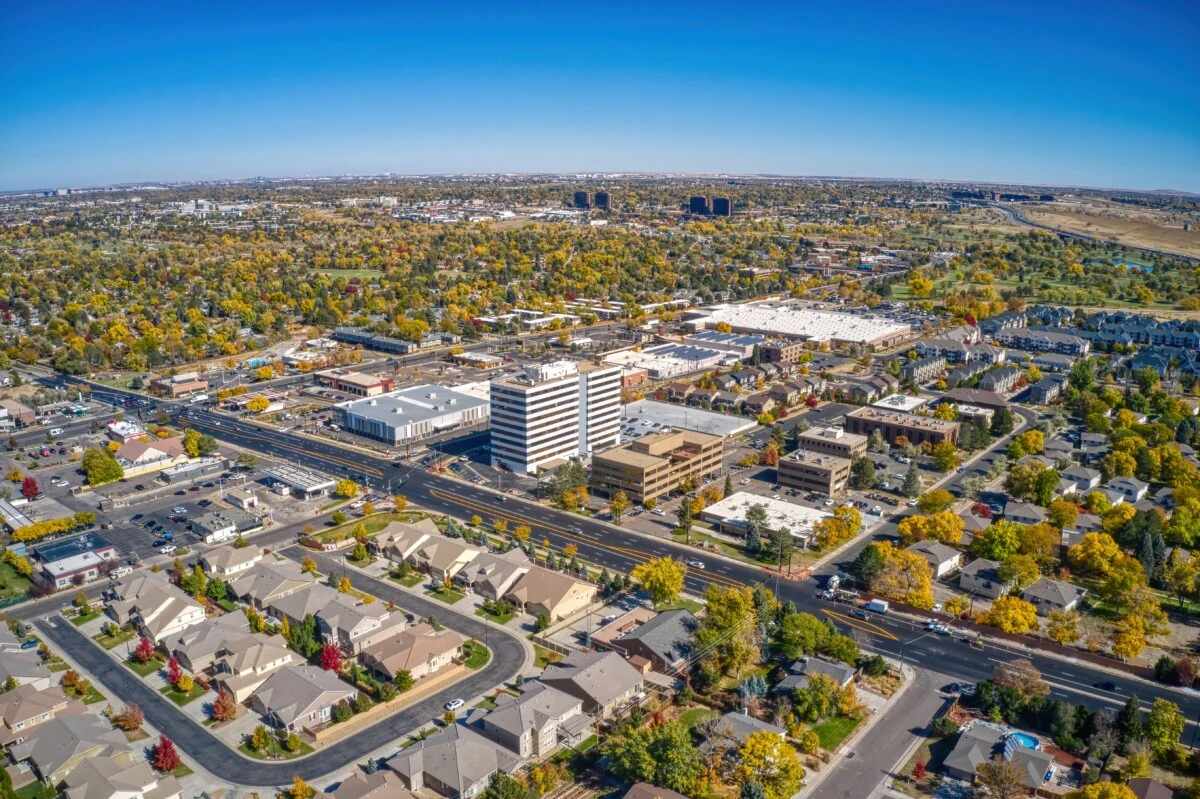
A practical commercial roofing plan for Dia Corridor properties separates urgent leak control from repair, coating, maintenance, and replacement decisions supported by photos and condition findings. The land along Peña Boulevard and E-470 has gone from open prairie to speculative warehouse parks and hotel pads in a short stretch of years, and it's still filling in. We estimate roofing for that buildout with the site conditions that actually apply out there, wide-open exposure, big unbroken roof fields, and construction schedules tied to a leasing calendar, not a slow retrofit timeline.
Wind Uplift on Wide-Open, Unobstructed Sites
There's nothing between the DIA corridor's warehouse parks and the wind coming off the plains, no tree lines, no adjacent buildings breaking the exposure, just flat ground running out toward the airport. That exposure category pushes wind-uplift design pressures higher than a comparable building tucked into an established industrial park closer to the city, and it changes fastening patterns at the field, perimeter, and corner zones of the roof.
We calculate uplift to the specific building height, roof zone, and exposure category rather than defaulting to a standard spec, and on corner and perimeter zones that usually means tighter fastener spacing or a fully adhered membrane instead of mechanically attached.
Speculative Warehouse Roofs Built to a Leasing Timeline
A lot of construction along this corridor is speculative, a shell goes up before a tenant is signed, and the roof has to be generic enough to support whatever build-out comes next, whether that's cold storage, e-commerce fulfillment, or light assembly. We spec roof systems with enough load capacity in the deck and enough clear penetrations planning to handle rooftop mechanical additions after a tenant signs, since retrofitting curbs and equipment pads into a finished roof later costs more than planning for it up front.
Turnaround time also matters more here than in an established market. Developers on a leasing deadline need a dried-in, weathertight roof on a fixed schedule, and we sequence crews and material delivery against that date rather than working an open-ended punch list.
Hotel Roofs Along Peña Boulevard
The hotel corridor feeding airport traffic is almost entirely low-slope over the guest room wings and meeting space, with rooftop package units serving individual floors or banquet areas. These roofs get more foot traffic than a typical warehouse, HVAC techs, cable and satellite contractors, seasonal decoration crews, so walkway pads at access points and around rooftop units matter more here than on a warehouse where nobody's up there between service calls.
We also size roof drains and scuppers generously on hotel roofs in this corridor. A clogged or undersized drain over an occupied guest floor turns into an interior water event fast, and re-carpeting a hotel hallway costs more than the extra drain would have.
FAA Height and Lighting Constraints Near DEN
Buildings in this corridor sit inside DEN's approach and departure surfaces, which puts limits on structure height and requires specific obstruction lighting on some rooftop equipment. We coordinate rooftop equipment placement and any height-adding roof work, parapet extensions, mechanical screening, with what the building's existing FAA determination allows, so a roof project doesn't accidentally trigger a new airspace review.
- Speculative and build-to-suit distribution warehouses
- Cold storage and last-mile fulfillment centers
- Airport-corridor hotels and extended-stay properties
- Air cargo and freight-forwarding facilities
- Rental car and ground transportation service buildings
- Truck parking and logistics support offices
Coating and Recover Options as the First Wave of Buildings Ages
The earliest warehouse construction in this corridor is now old enough to be coming up on its first major roof decision, typically ten to fifteen years in. On TPO and PVC roofs that are still structurally sound but showing seam wear or UV chalking, a silicone recoat can extend service life at a fraction of a full recover, provided the membrane passes an adhesion test first.
We don't recommend a coating over a membrane that's already failing at the seams, that's patching a problem that's going to come back. Coating makes sense on a roof that's still tight but aging, not one that's already leaking.
DIA Corridor Roofing Questions From Developers and Property Managers
Why does wind exposure matter more out here than in town?
There's no wind break, no buildings, no tree lines, between these sites and open prairie. That pushes uplift design pressures higher, especially at roof corners and perimeters, and changes how tight the fastening pattern needs to be.
Can you meet a construction schedule tied to a lease signing?
Yes, and that's the norm for speculative buildings out here. We sequence crews and material delivery against a fixed dry-in date rather than an open punch list.
Do hotel roofs along Peña Boulevard need anything different from a warehouse roof?
More foot traffic and more rooftop equipment per square foot, which means walkway pads at access points and generously sized drains. A clogged drain over occupied guest rooms is a much bigger problem than one over an empty warehouse bay.
Does proximity to DEN limit what we can do with the roof?
It can affect height and lighting on rooftop additions, since these sites sit inside the airport's approach and departure surfaces. We check the building's existing FAA determination before adding height or new equipment.
Is a coating a real option on our warehouse roof, or just a stopgap?
It depends on membrane condition. A sound TPO or PVC roof that's aging but not leaking at the seams is a good coating candidate. A roof already failing at the seams needs a recover or tear-off, not a coating.