Commercial Roofers in Centennial
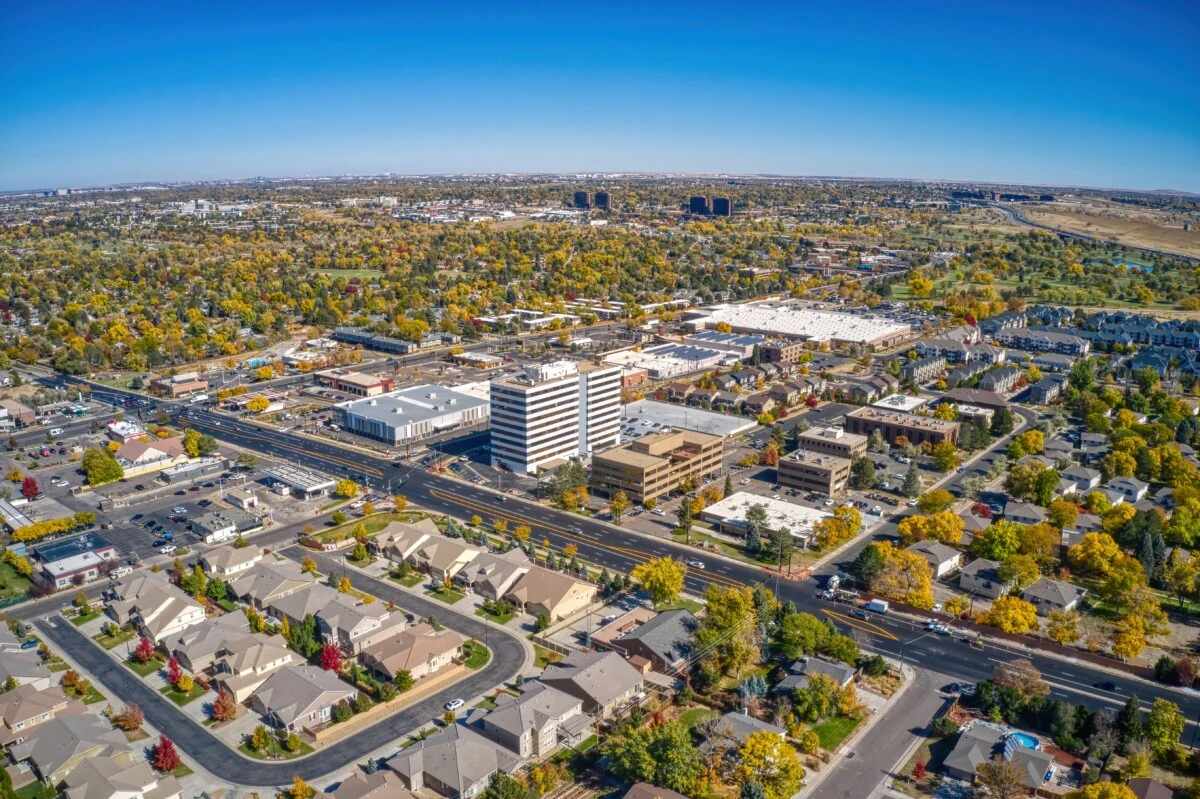
A practical commercial roofing plan for Centennial properties separates urgent leak control from repair, coating, maintenance, and replacement decisions supported by photos and condition findings. Centennial covers three very different roof types inside one city, suburban office park low-slope, retail strip and pad buildings, and the long-span metal roofs over the hangars at Centennial Airport. We quote each on the specs and loading that actually apply to that building type, not a one-size number.
Office Park Reroofs on Occupied Buildings
Most of Centennial's office stock along Arapahoe Road and the I-25 frontage is low-slope TPO or EPDM over a steel deck, and most of it is occupied during any reroof or recover project. Odor, noise, and vibration from tear-off work reach tenant space fast in a building with a lot of rooftop mechanical penetrations, so we sequence work in sections and schedule the noisiest phases, deck fastening, mechanical demo, around building hours where the lease allows it.
Rooftop HVAC density on these buildings tends to be high relative to the roof's total square footage, which means a lot of curb flashing and pitch pockets to detail correctly. We treat curb count as a line item in the estimate, not an afterthought, because that's where labor hours actually go on an office park reroof.
Retail Strip and Pad Building Roofs
Retail along Arapahoe and the Streets at SouthGlenn is a mix of anchor-tenant big boxes and smaller strip and pad buildings, most on mechanically attached TPO or a modified bitumen cap sheet. Anchor boxes have wide-open fields with fewer penetrations; strip centers have more roof breaks for individual tenant HVAC and exhaust, plus a rooftop sign structure or two that needs a proper base flashing and counterflashing detail rather than a bead of caulk holding it together.
We coordinate reroofs on multi-tenant strip buildings around individual leases where possible, since shutting down access to one tenant's loading area for a day affects that business directly, and landlords generally want that minimized. On a strip building with five or six separate tenants, we sequence the field membrane in blocks that match the tenant unit lines below, so a bakery's loading dock stays clear the same week a neighboring salon's parking is unaffected.
Centennial Airport Hangar Roofs: Clear-Span Metal
Hangar roofs are a different animal entirely, long clear-span standing seam or R-panel metal roofs over open aircraft bays, often with large bi-fold or hydraulic doors that change how wind loads the structure. Wind uplift calculations on a hangar have to account for internal pressure changes when the main door is open, which is a condition a typical warehouse or office roof never sees.
Standing seam metal on hangars also takes more thermal movement than a comparable membrane roof because of the exposed panel length and the temperature swing inside an unconditioned or partially conditioned bay. We detail expansion at the ridge and eave to the panel manufacturer's spec rather than a generic metal roofing detail, since a hangar that doesn't accommodate that movement gets oil-canning and eventually seam fatigue.
- Suburban office park buildings, one to five stories
- Grocery-anchored and pad-site retail centers
- Centennial Airport hangars and FBO buildings
- Medical and dental office buildings
- Light industrial and flex space near the airport
- Multifamily clubhouse and amenity structures
Roof Condition Assessments Tied to a Capital Budget
A lot of the calls we get from Centennial property managers start with a budget question, not a leak, what's this roof's remaining useful life, and when does it need to be in next year's capital plan versus deferred another cycle. We walk the roof, core-cut where warranted, and give a written condition assessment with a realistic timeline rather than a sales pitch for immediate replacement.
That assessment matters most on multi-building office park portfolios, where staggering four or five roof replacements across several budget years instead of all at once is often the more realistic path for ownership.
Snow Load and Drainage on Flat Office Roofs
Front Range snow tends to come in heavier, wetter storms than a typical winter freeze-thaw climate, and flat office roofs with undersized or partially blocked drains hold that weight longer than they should. We check drain and scupper sizing against current code requirements during any reroof rather than simply clean out the existing ones, since a lot of older office buildings were built to a drainage standard that's since been tightened and the original drain count may no longer be adequate.
Centennial Roofing Questions From Property and Facility Managers
How do you keep tenants comfortable during an office reroof?
We sequence tear-off and mechanical work in sections and schedule the loudest phases around building hours where the lease allows, so one part of the building stays quiet while another is under construction.
What's different about pricing a hangar roof versus a warehouse roof?
Wind uplift calculations have to account for the main door being open, which changes internal pressure on the structure. Panel length and thermal movement also matter more on a hangar than on a typical low-slope membrane roof.
Can you work around individual tenant leases in a strip center?
Yes, that's standard for multi-tenant retail. We coordinate access and staging so we're not blocking one tenant's loading area for the whole project.
Do you provide a written roof condition report for capital planning?
Yes, and for portfolio owners with several buildings, that report usually recommends staggering replacements across budget years rather than doing everything at once.
Are our drains sized correctly for Front Range snow?
Not always, especially on older office buildings. We check drain and scupper sizing against current code during any reroof rather than assuming the original design still applies.