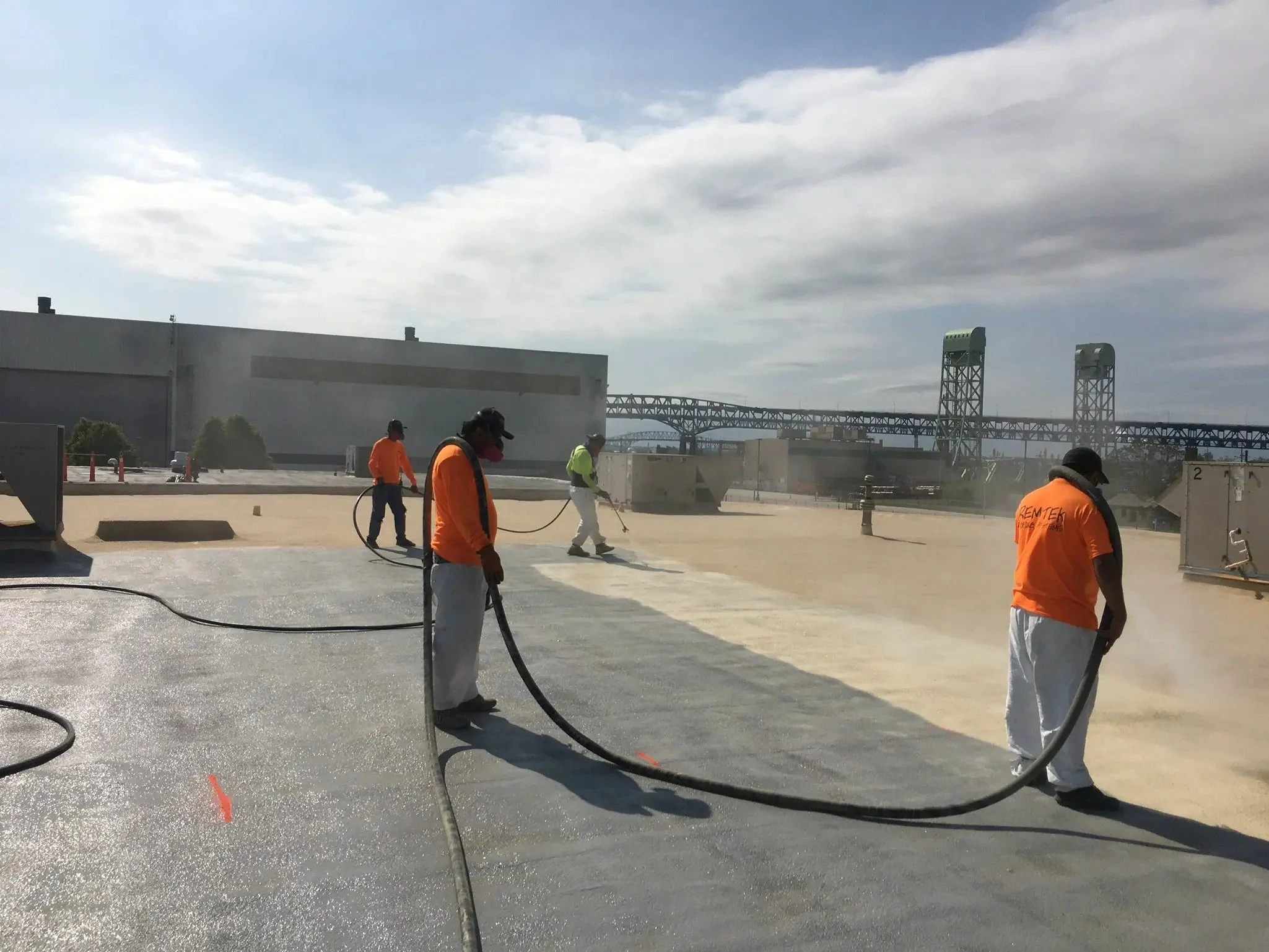
Silicone Coatings for Aging Roofs Around the Tech Center
Silicone coating is the recover strategy we bring to owners around Greenwood Village, Inverness, and Meridian who are holding an aging built-up or modified bitumen roof and trying to avoid a full capital tear-off this budget cycle.
A Restoration Strategy, Not a New Assembly
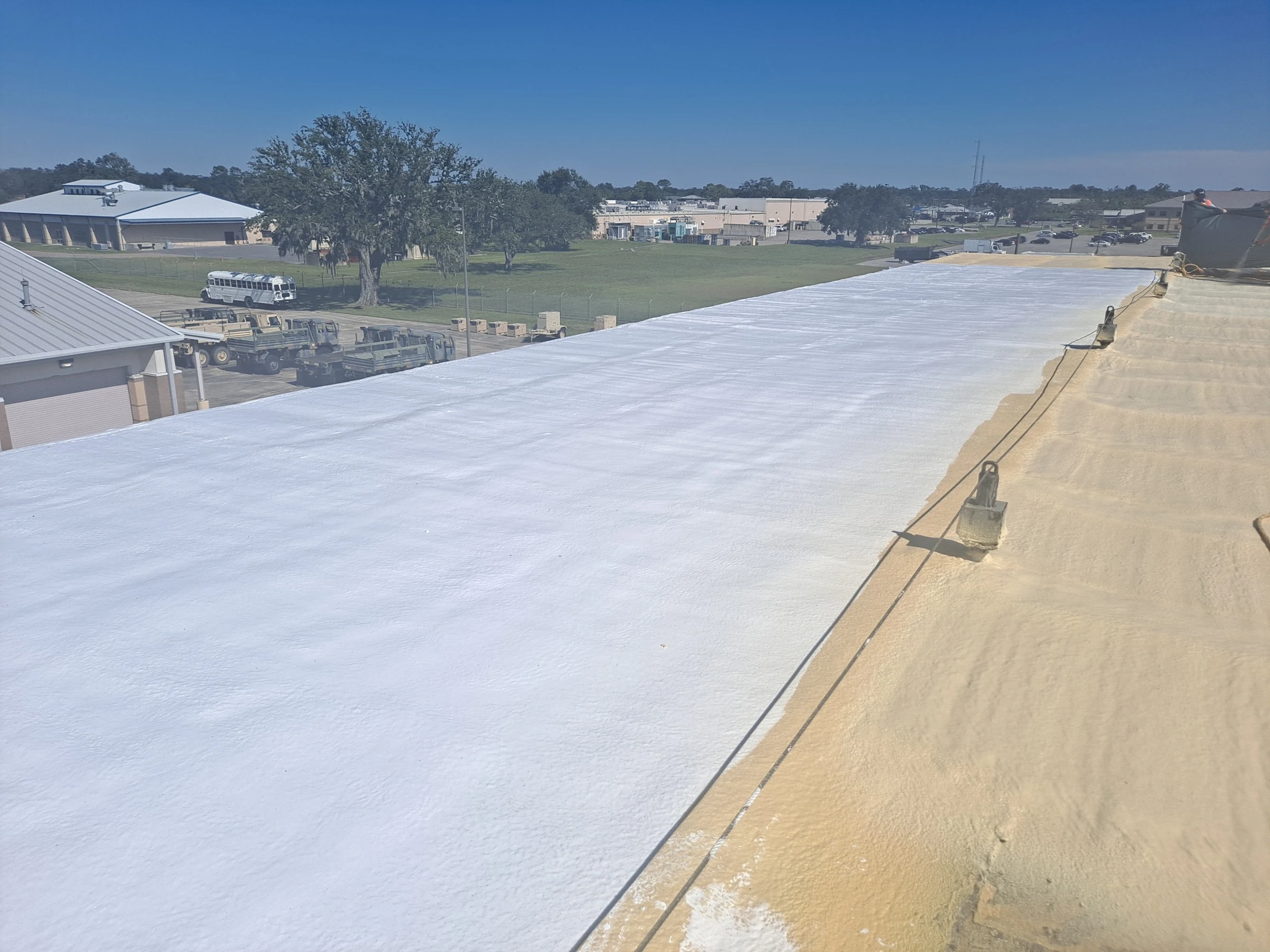
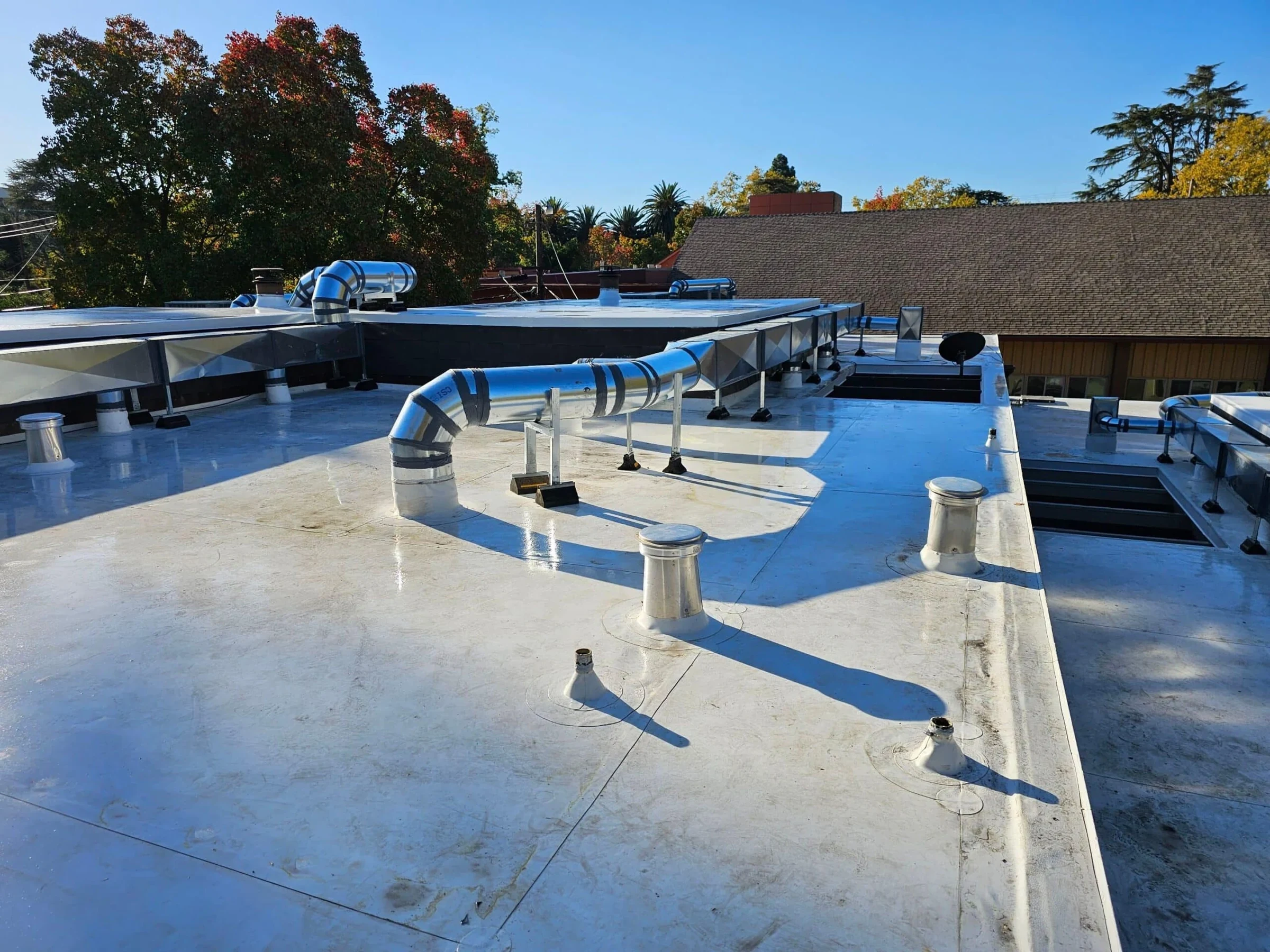
Silicone coating is applied over an existing membrane, not installed as a standalone roof system, and that distinction matters for the budget conversation. It is not tested or rated under UL 2218 or FM 4473 as an independent impact-resistant assembly the way a new membrane can be. What it does is extend the service life of a sound existing roof by sealing seams, restoring surface integrity, and adding a reflective, UV-stable top layer over material that would otherwise be aging toward replacement.
We are direct with owners about this distinction: coating a roof that already has hail damage or a compromised deck does not fix the underlying problem, it just delays the point at which that problem becomes visible again.
Ponding Water and UV Stability
Silicone coating resists standing water better than most other coating chemistries, which matters on the flat, aging built-up roofs common on Denver Tech Center-era office buildings where drainage was designed to a different standard than current code requires. Ponding water that would degrade acrylic or asphaltic coatings over time is something silicone handles without the same breakdown pattern.
Silicone is also inherently UV-stable, which matters at Aurora's elevation where solar load on a rooftop is higher than at sea level. The coating does not rely on a separate UV-protective top coat the way some other restoration chemistries do.
Freeze-Thaw Elasticity Over an Aging Substrate
An existing built-up or modified bitumen roof has already been through years of freeze-thaw cycling by the time we are evaluating it for a coating job, and the substrate's existing cracks, alligatoring, and seam separation all factor into whether coating is even a responsible recommendation. Silicone coating remains elastomeric across a wide temperature range, which lets it bridge minor existing surface cracking, but it cannot bridge structural deck movement or address wet insulation underneath the membrane.
The Inspection That Has to Happen First
Before we quote a silicone coating job, we probe the existing roof for wet insulation, check seam condition at every lap, and review flashing detail at every penetration and parapet. A coating applied over trapped moisture traps that moisture permanently and accelerates deck deterioration rather than slowing it. That inspection step is not optional on our estimates, even when an owner is pushing for the fastest, cheapest path forward.
- Aging built-up or modified bitumen roofs with sound, dry insulation
- Roofs with documented ponding water history and no structural drainage defect
- Office buildings deferring a full capital reroof by one or more budget cycles
- Roofs with minor surface cracking but no active leaks at the deck
- Buildings pursuing reflective surface credit without a full membrane replacement
Cost Per Square Foot Against a Full Reroof
Silicone coating runs a fraction of full tear-off and replacement cost per square foot, which is exactly why it gets requested so often on aging Tech Center office stock where a full capital reroof competes against other building improvements for the same budget line. The honest number to compare is not coating cost against reroof cost in isolation, it is coating cost plus the remaining service life it buys against a reroof cost amortized over a full new-system service life.
For a roof with two to five years of remaining useful life in the substrate, coating usually wins that comparison. For a roof already showing structural or widespread seam failure, coating is deferring an expense rather than solving it, and we say so directly on the estimate.
We also budget for a maintenance recoat cycle after the initial application, since silicone's UV and ponding resistance is strongest when the coating film is maintained at its specified thickness. A thin or unevenly applied coat degrades faster than a properly applied one, which is part of why we measure and document mil thickness during application rather than estimating coverage by eye. That documentation also gives the next facilities manager a starting point instead of a guess about when the coating was last serviced, which matters on buildings that change ownership or property management firms during the roof's service life.
Silicone Roof Coating Questions
Can silicone coating be applied over any existing roof?
No. It requires a sound, dry substrate. We probe for wet insulation and check seam and flashing condition before recommending it.
Does silicone coating fix hail damage?
No. Coating restores surface integrity and extends service life on a sound roof. It does not repair existing structural or hail-related damage.
How long does a silicone coating typically extend roof life?
It depends on the condition of the existing substrate at the time of application. We give a service-life estimate specific to the roof after inspection, not a blanket number.
Is silicone coating a permanent alternative to reroofing?
No. It is a restoration strategy that delays a full reroof, not a permanent replacement for one. Eventually the underlying substrate will need replacement.
What happens if wet insulation is found during inspection?
Wet areas need to be cut out and replaced before coating, or the project may not be a good candidate for coating at all. We flag this before quoting, not after the work starts, since discovering it mid-project turns a simple restoration into a change-order conversation nobody wants.