White EPDM for School and Municipal Roofs
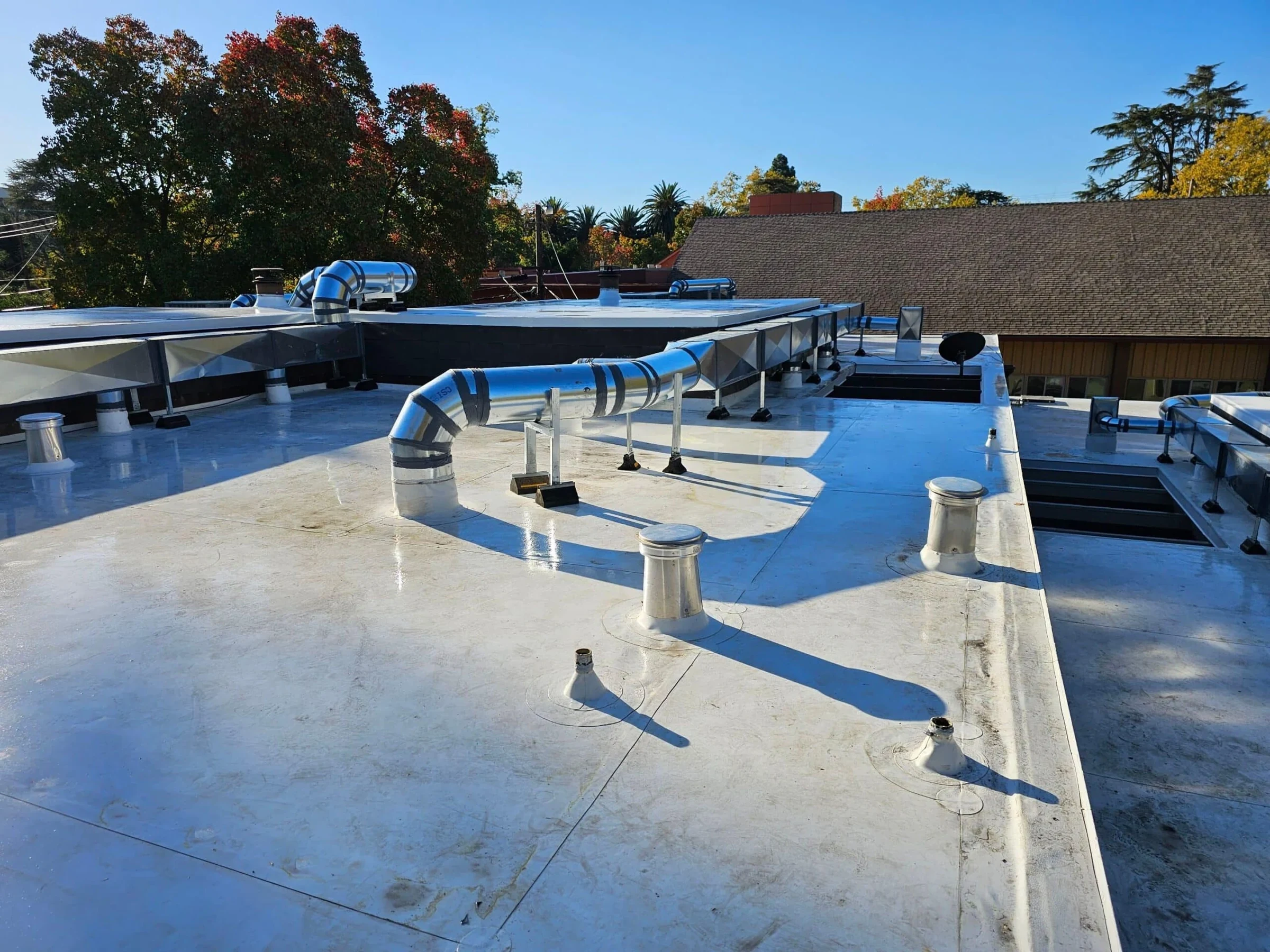
White EPDM keeps the same rubber-membrane performance as the black sheet but trades the absorptive dark surface for reflectivity, which is why it comes up most on school, municipal, and public-facing buildings around Aurora where energy budgets get scrutinized every year.
Same Rubber, Different Surface
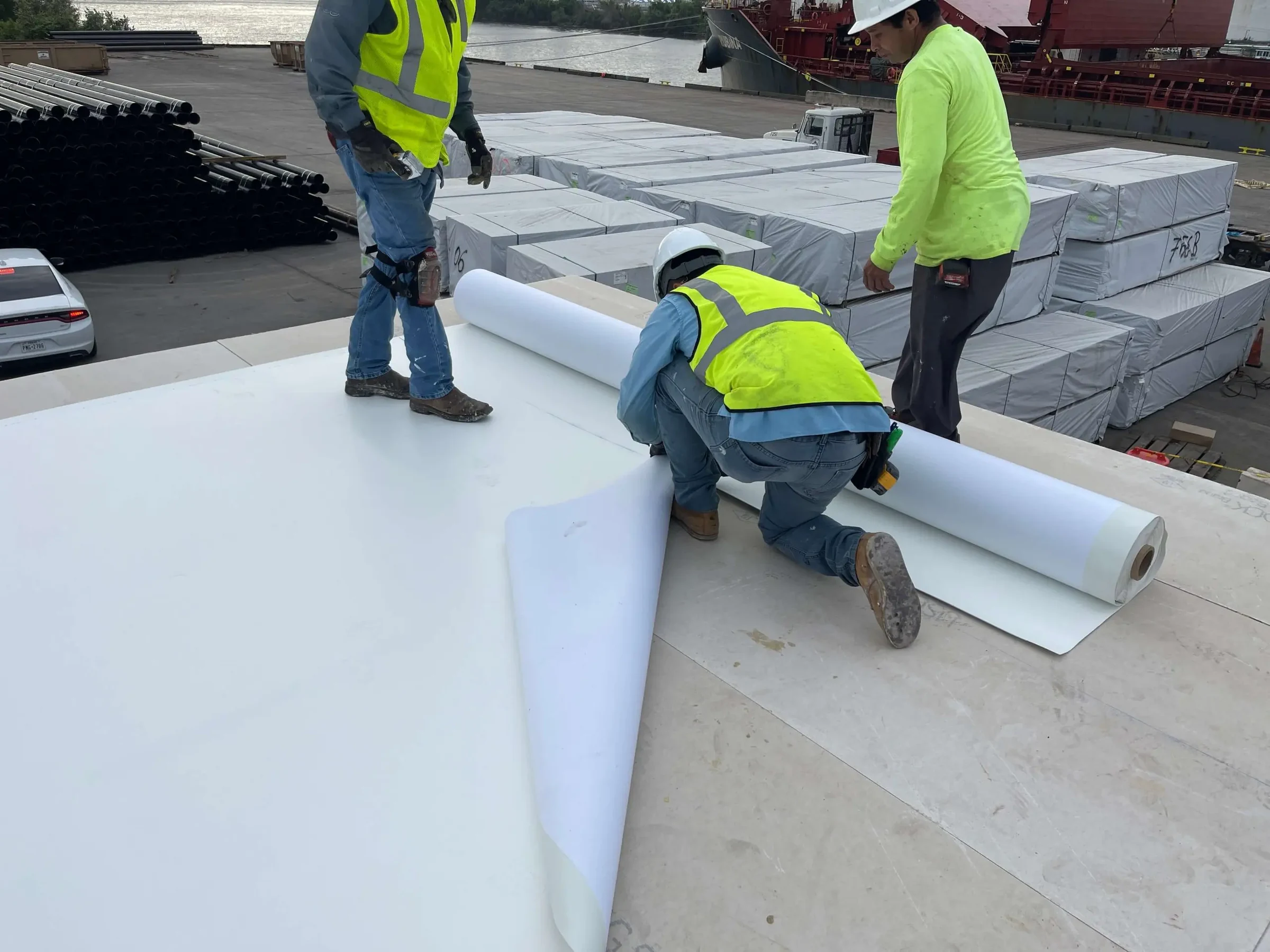
White EPDM is chemically the same synthetic rubber as black EPDM, with a reflective white surface laminated or co-extruded onto the membrane. The rubber's flexibility, adhesive-seaming method, and cold-weather performance carry over directly, so a district or facilities department switching from black to white on a reroof is not trading away the base material's track record for a coating.
What changes is surface temperature and, over time, some of the surface weathering pattern compared to black membrane, since the white surface is reflecting rather than absorbing the solar load.
Reflectivity and Rooftop HVAC Load
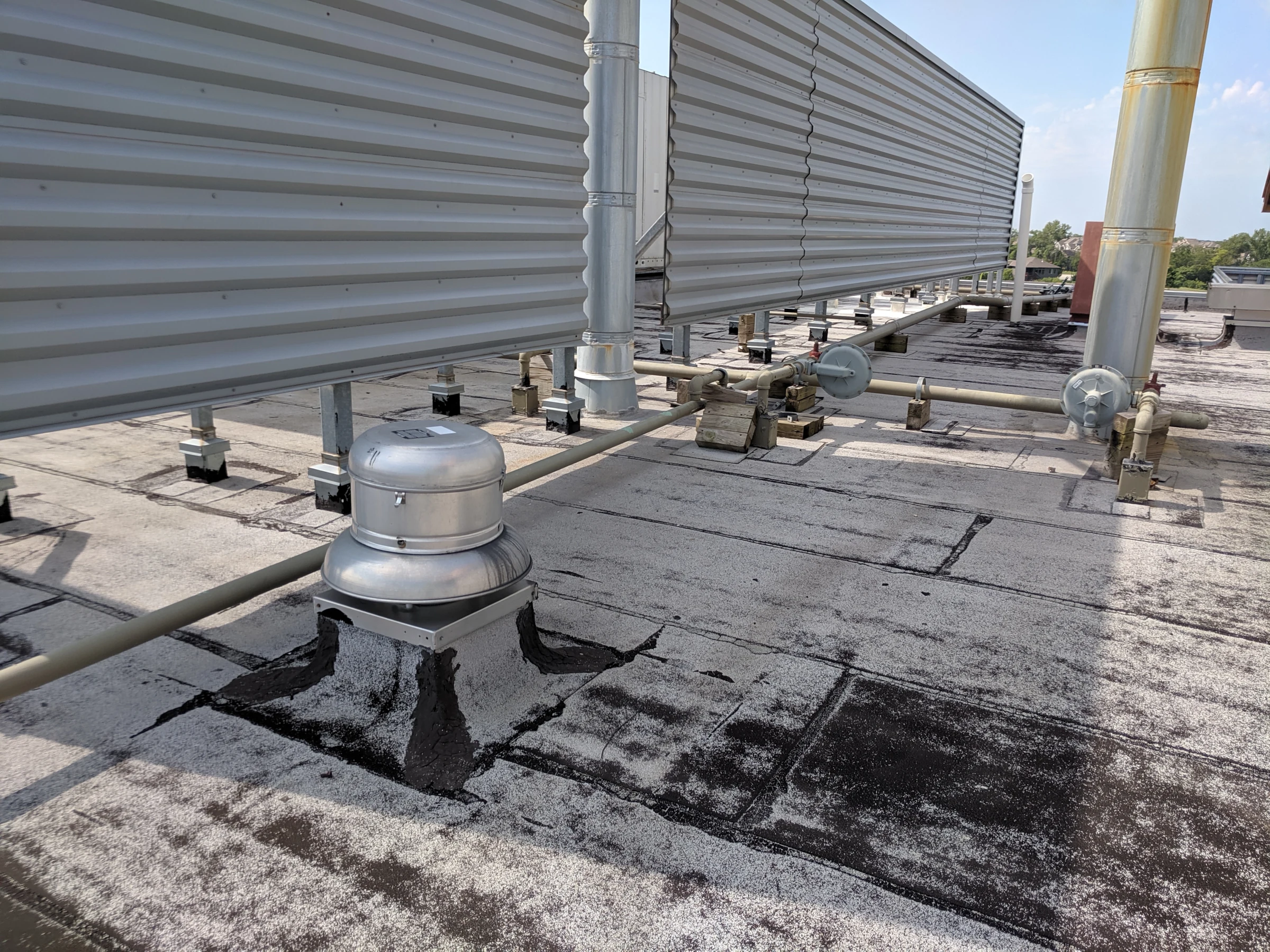
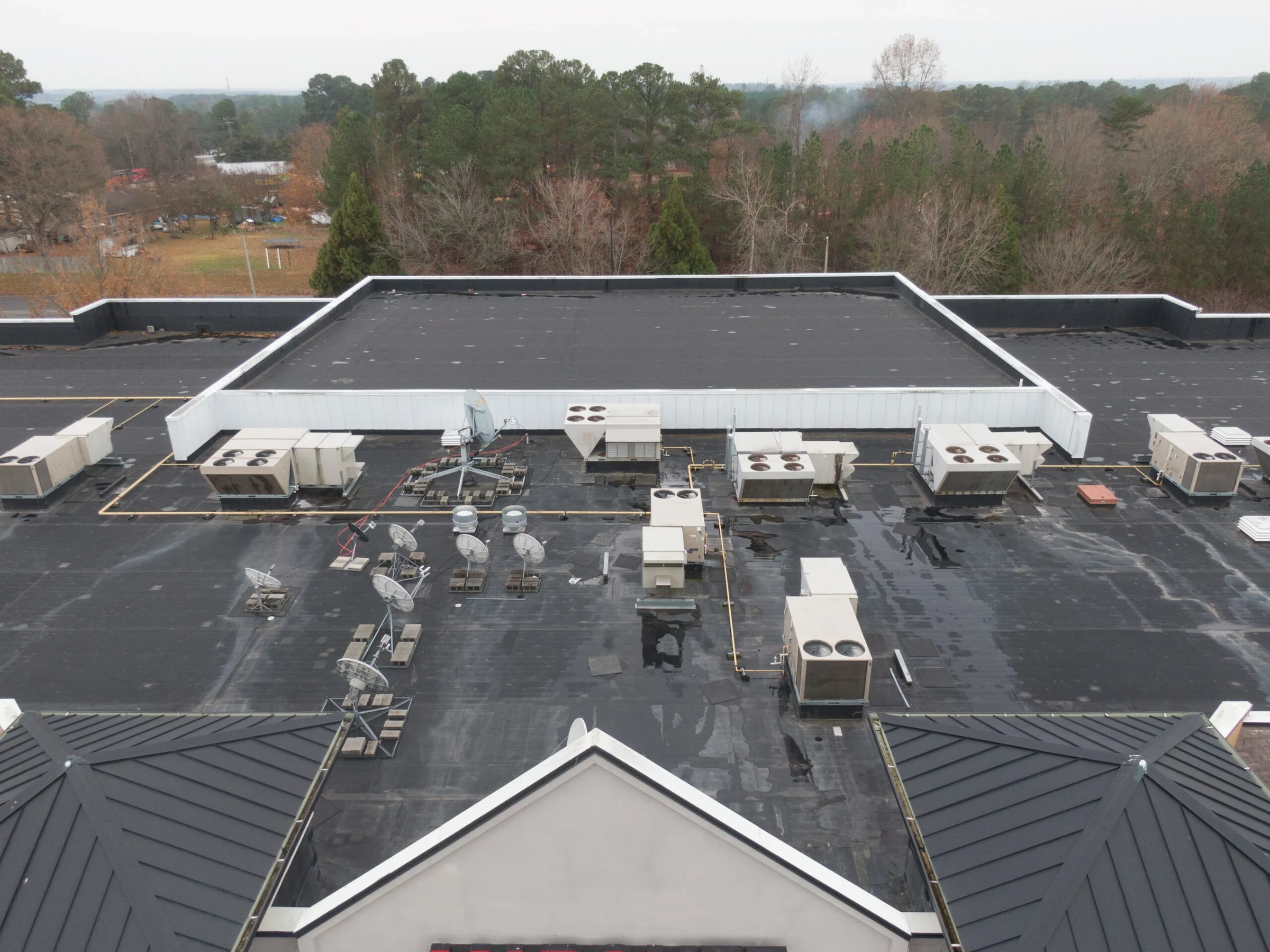
Aurora Public Schools and Cherry Creek School District buildings, along with municipal facilities, often carry aging rooftop HVAC units that were sized against an older roof surface. A reflective white membrane lowers roof surface temperature relative to black, which can ease load on rooftop units during peak summer afternoons. That is a facilities-budget conversation as much as a roofing one, and we walk district and municipal facilities staff through the reflectivity numbers on the manufacturer's product data sheet rather than a general claim.
For public buildings pursuing an energy code compliance path or a cool-roof requirement tied to a grant or incentive program, white EPDM's reflectivity is documented on the same product data sheet that gets submitted with the compliance paperwork.
Freeze-Thaw Performance Unchanged From Black EPDM
The front range's temperature swings hit a school roof the same way they hit any other low-slope roof in the market, and white EPDM's cold-weather flexibility matches black EPDM because the base rubber compound is the same. We do not change our winter installation approach or seam-cure windows based on membrane color, only based on the actual air and surface temperature on install day.
Where the Reflective Surface Pays Off Most
Flat-roofed school buildings with large open field areas and minimal shading see the biggest surface-temperature benefit from white membrane, simply because more of the roof is exposed to direct sun for more of the day. Municipal buildings around Castle Rock and Highlands Ranch with similar low-slope, minimally shaded roof fields see a comparable benefit.
- K-12 school buildings with large, low-slope roof fields
- Municipal administration and public-safety buildings
- Buildings pursuing cool-roof credit under an energy code or incentive program
- Recover-eligible roofs where reflectivity is a stated facilities-department priority
- Buildings with aging rooftop HVAC units where surface heat load matters
Budgeting White EPDM Against a District's Capital Cycle
School and municipal reroofs typically run on a multi-year capital planning cycle with board or council approval attached, which means the budget conversation is different from a private landlord's. We price white EPDM against black EPDM on the same estimate so a facilities director can show the incremental cost of reflectivity to whoever approves the capital line item, along with the expected surface-temperature benefit documented from the product data sheet.
Recover eligibility matters even more on a public building, since a full tear-off carries disruption costs around a school calendar or public building hours that a private landlord does not have to plan around in the same way.
Maintenance Cadence on a District Roof
Public buildings often go through a formal maintenance bid cycle separate from the original install contract, which means the crew doing annual drain and seam checks may not be the same one that installed the roof. We write our inspection reports for white EPDM roofs assuming a different contractor may read them later, noting drain condition, seam lap integrity, flashing wear, and any surface soiling that is starting to reduce reflectivity.
For Aurora Public Schools and Cherry Creek School District buildings specifically, we schedule non-emergency inspection and maintenance visits around the academic calendar, avoiding the first weeks of the school year and standardized testing windows when roof access could disrupt the building below. A logged maintenance history also helps a district justify a future capital reroof request with documentation instead of a general age argument alone.
White EPDM Questions From Facilities Managers
Is white EPDM more expensive than black EPDM?
There is typically a modest premium for the reflective surface. We put both options on the estimate so the incremental cost is clear before a capital decision is made.
Does white EPDM stay reflective over its full service life?
Reflectivity can decline gradually with surface soiling and weathering, consistent with most reflective roofing membranes. Periodic washing can help maintain reflectivity where that is a stated priority.
Can a reroof be scheduled around a school calendar?
Yes. We sequence school and municipal reroofs to minimize disruption to occupied hours and coordinate around the calendar the facilities department gives us.
Does white EPDM require different maintenance than black EPDM?
Base maintenance is similar: drain and scupper checks, seam inspection, and flashing review. Reflective surfaces benefit from periodic cleaning to maintain their reflectivity value.
Will white EPDM help with an energy code compliance submission?
The manufacturer's product data sheet documents reflectivity and emissivity values that can support a compliance submission. We provide that documentation as part of the project package, formatted so it can be attached directly to a district or municipal permit file without additional translation work on the facilities side.